




Ethereum and Aptos both use authenticated state, but the way application developers think about storage is different.
Ethereum storage
Section titled “Ethereum storage”Ethereum organizes state around accounts and contract storage tries. Contract data usually feels local to the contract that owns it.
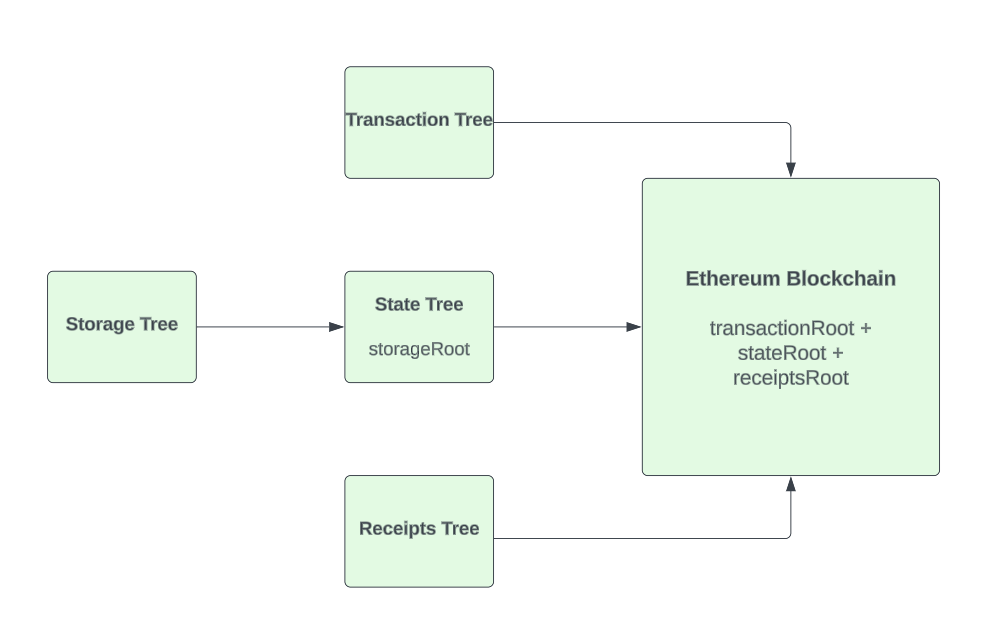
The usual Solidity instinct is:
- deploy a contract
- store mappings and arrays inside that contract
- treat the contract as both the code container and the primary state container
Aptos storage
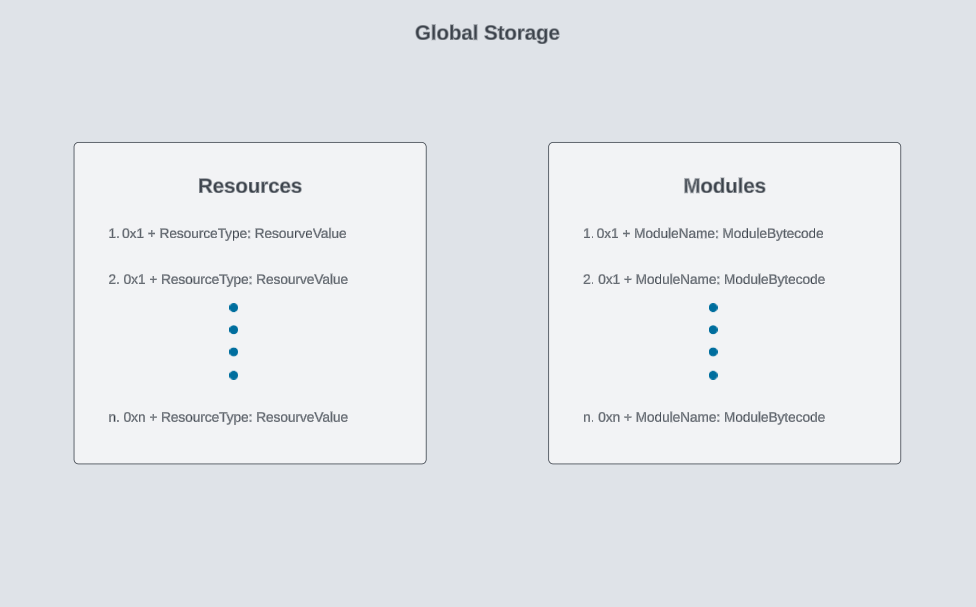
Section titled “Aptos storage”Move programs read from and write to global storage. Conceptually:
resources: (address, ResourceType) -> valuemodules: (address, ModuleName) -> bytecodeThat changes the mental model:
- state is typed and globally addressable
- the same module can read or mutate resources across many addresses if it has permission
- reusable state containers are often built with Objects
Migration takeaway
Section titled “Migration takeaway”If you are porting a Solidity mapping(address => T), do not start by reproducing the mapping mechanically. First decide whether:
- each user should store their own
Tunder their account - a shared object should own the state
- a framework standard already provides the storage pattern you need
For most modern Aptos applications, Objects are the preferred shared container abstraction.